 Kalvarija
Sunset schedule for Kalvarija
At the top of the Kalvarija steps
Be at the top a little before
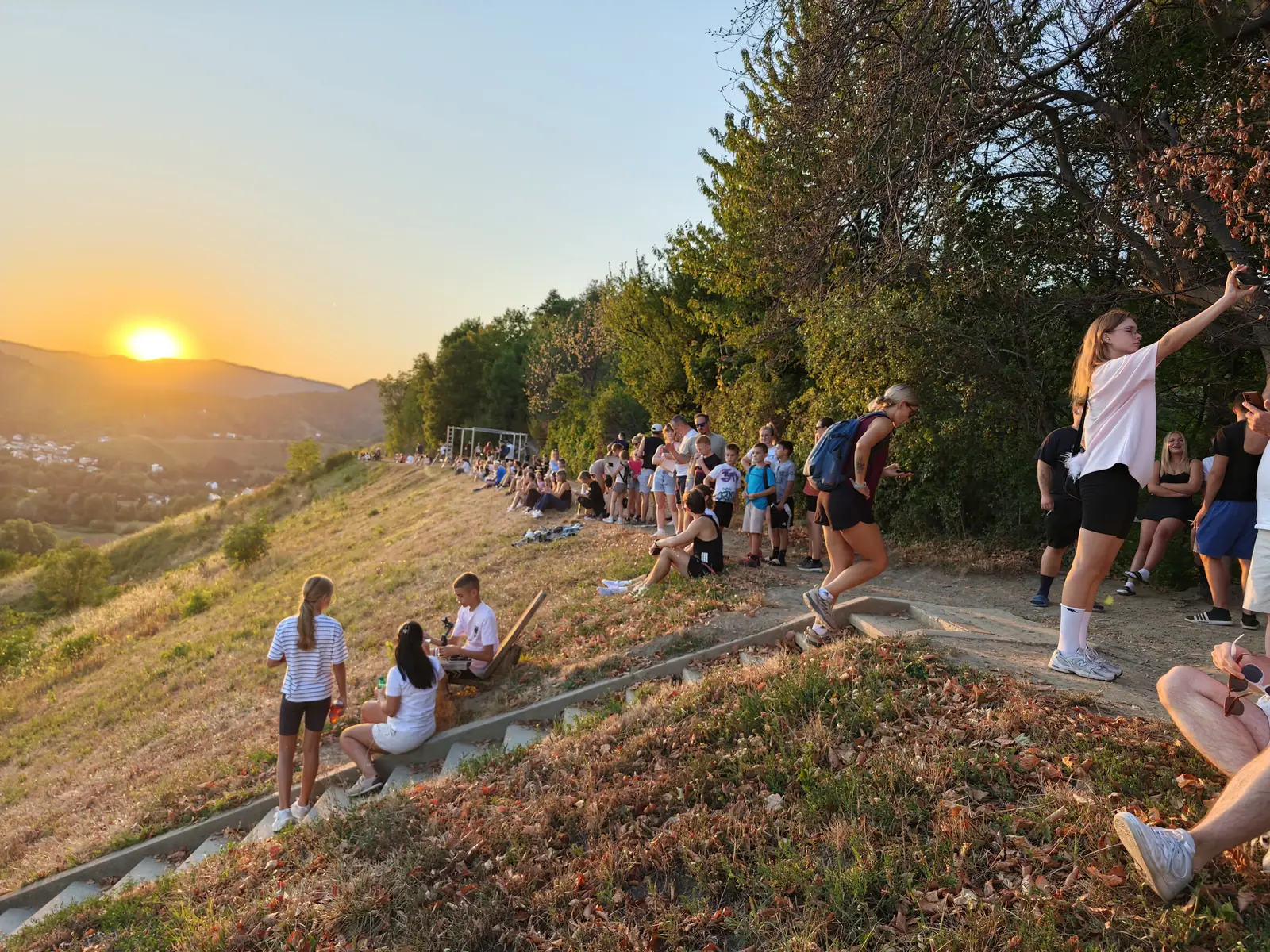
Sunset schedule for Kalvarija
Sunset schedule for Kalvarija
Times to be at the top for sunrise and sunset.
September 2026
| day | sunrise | sunset |
|---|---|---|
| 1 | 06:21 | 19:07 |
| 2 | 06:22 | 19:05 |
| 3 | 06:23 | 19:03 |
| 4 | 06:24 | 19:03 |
| 5 | 06:25 | 19:01 |
| 6 | 06:26 | 19:00 |
| 7 | 06:27 | 18:58 |
| 8 | 06:27 | 18:55 |
| 9 | 06:29 | 18:53 |
| 10 | 06:29 | 18:52 |
| 11 | 06:30 | 18:50 |
| 12 | 06:30 | 18:48 |
| 13 | 06:31 | 18:46 |
| 14 | 06:31 | 18:44 |
| 15 | 06:33 | 18:42 |
| 16 | 06:33 | 18:39 |
| 17 | 06:34 | 18:38 |
| 18 | 06:35 | 18:36 |
| 19 | 06:36 | 18:34 |
| 20 | 06:38 | 18:33 |
| 21 | 06:39 | 18:31 |
| 22 | 06:40 | 18:29 |
| 23 | 06:42 | 18:27 |
| Autumn equinox at 02:05. Astronomical autumn begins. | ||
| 24 | 06:43 | 18:25 |
| 25 | 06:44 | 18:24 |
| 26 | 06:45 | 18:22 |
| Day and night are the same length From now on, nights are longer than days. | ||
| 27 | 06:47 | 18:21 |
| 28 | 06:48 | 18:19 |
| 29 | 06:49 | 18:18 |
| 30 | 06:50 | 18:18 |
October 2026
| day | sunrise | sunset |
|---|---|---|
| 1 | 06:52 | 18:15 |
| 2 | 06:53 | 18:15 |
| 3 | 06:54 | 18:14 |
| 4 | 06:55 | 18:09 |
| 5 | 06:57 | 18:07 |
| 6 | 06:58 | 18:05 |
| 7 | 06:59 | 18:02 |
| 8 | 07:01 | 18:00 |
| 9 | 07:02 | 17:58 |
| 10 | 07:04 | 17:56 |
| 11 | 07:06 | 17:55 |
| 12 | 07:08 | 17:53 |
| 13 | 07:08 | 17:51 |
| 14 | 07:10 | 17:47 |
| 15 | 07:11 | 17:43 |
| 16 | 07:12 | 17:40 |
| 17 | 07:13 | 17:39 |
| 18 | 07:15 | 17:38 |
| 19 | 07:16 | 17:36 |
| 20 | 07:17 | 17:33 |
| 21 | 07:19 | 17:31 |
| 22 | 07:20 | 17:29 |
| 23 | 07:22 | 17:26 |
| 24 | 07:23 | 17:25 |
| 25 | 06:24 | 16:22 |
| Clocks go back (winter time) from 03:00 to 02:00. Sunrise and sunset are an hour earlier than the day before. | ||
| 26 | 06:25 | 16:18 |
| 27 | 06:27 | 16:17 |
| 28 | 06:29 | 16:16 |
| 29 | 06:30 | 16:15 |
| 30 | 06:32 | 16:13 |
| 31 | 06:33 | 16:11 |
November 2026
| day | sunrise | sunset |
|---|---|---|
| 1 | 06:34 | 16:09 |
| 2 | 06:35 | 16:07 |
| 3 | 06:37 | 16:04 |
| 4 | 06:38 | 16:03 |
| 5 | 06:40 | 16:01 |
| 6 | 06:41 | 16:00 |
| 7 | 06:43 | 15:58 |
| 8 | 06:45 | 15:57 |
| 9 | 06:46 | 15:55 |
| 10 | 06:48 | 15:54 |
| 11 | 06:49 | 15:52 |
| 12 | 06:50 | 15:51 |
| 13 | 06:53 | 15:49 |
| 14 | 06:54 | 15:48 |
| 15 | 06:55 | 15:46 |
| 16 | 06:57 | 15:45 |
| 17 | 06:58 | 15:43 |
| 18 | 06:59 | 15:42 |
| 19 | 07:01 | 15:40 |
| 20 | 07:02 | 15:39 |
| 21 | 07:03 | 15:37 |
| 22 | 07:05 | 15:36 |
| 23 | 07:06 | 15:33 |
| 24 | 07:07 | 15:33 |
| 25 | 07:09 | 15:32 |
| 26 | 07:10 | 15:30 |
| 27 | 07:12 | 15:29 |
| 28 | 07:13 | 15:29 |
| 29 | 07:14 | 15:28 |
| 30 | 07:15 | 15:28 |
December 2026
| day | sunrise | sunset |
|---|---|---|
| 1 | 07:17 | 15:27 |
| 2 | 07:18 | 15:27 |
| 3 | 07:19 | 15:27 |
| 4 | 07:20 | 15:26 |
| 5 | 07:21 | 15:26 |
| 6 | 07:22 | 15:25 |
| 7 | 07:23 | 15:25 |
| 8 | 07:24 | 15:24 |
| 9 | 07:25 | 15:24 |
| 10 | 07:26 | 15:24 |
| Earliest sunset of the year It comes before the shortest day. | ||
| 11 | 07:27 | 15:24 |
| 12 | 07:28 | 15:24 |
| 13 | 07:29 | 15:23 |
| 14 | 07:30 | 15:23 |
| 15 | 07:30 | 15:24 |
| 16 | 07:31 | 15:24 |
| 17 | 07:32 | 15:24 |
| 18 | 07:33 | 15:24 |
| 19 | 07:33 | 15:25 |
| 20 | 07:34 | 15:25 |
| 21 | 07:34 | 15:26 |
| Winter solstice: the shortest day at 21:50. Daylight lasts 8 h 34 min, the night 15 h 26 min. | ||
| 22 | 07:35 | 15:26 |
| 23 | 07:35 | 15:27 |
| 24 | 07:36 | 15:27 |
| 25 | 07:36 | 15:28 |
| 26 | 07:36 | 15:29 |
| 27 | 07:37 | 15:29 |
| 28 | 07:37 | 15:30 |
| 29 | 07:37 | 15:31 |
| 30 | 07:37 | 15:32 |
| 31 | 07:37 | 15:33 |
January 2027
| day | sunrise | sunset |
|---|---|---|
| 1 | 07:37 | 15:34 |
| Latest sunrise of the year The darkest mornings come after the shortest day. | ||
| 2 | 07:37 | 15:35 |
| 3 | 07:37 | 15:36 |
| 4 | 07:37 | 15:37 |
| 5 | 07:37 | 15:39 |
| 6 | 07:37 | 15:41 |
| 7 | 07:37 | 15:42 |
| 8 | 07:36 | 15:43 |
| 9 | 07:36 | 15:44 |
| 10 | 07:36 | 15:45 |
| 11 | 07:36 | 15:47 |
| 12 | 07:35 | 15:48 |
| 13 | 07:34 | 15:49 |
| 14 | 07:34 | 15:50 |
| 15 | 07:33 | 15:52 |
| 16 | 07:32 | 15:53 |
| 17 | 07:32 | 15:55 |
| 18 | 07:31 | 15:57 |
| 19 | 07:30 | 16:00 |
| 20 | 07:30 | 16:01 |
| 21 | 07:29 | 16:05 |
| 22 | 07:28 | 16:06 |
| 23 | 07:27 | 16:09 |
| 24 | 07:26 | 16:10 |
| 25 | 07:25 | 16:12 |
| 26 | 07:24 | 16:14 |
| 27 | 07:23 | 16:16 |
| 28 | 07:23 | 16:18 |
| 29 | 07:21 | 16:20 |
| 30 | 07:20 | 16:21 |
| 31 | 07:18 | 16:23 |
February 2027
| day | sunrise | sunset |
|---|---|---|
| 1 | 07:17 | 16:25 |
| 2 | 07:16 | 16:26 |
| 3 | 07:15 | 16:28 |
| 4 | 07:13 | 16:29 |
| 5 | 07:12 | 16:31 |
| 6 | 07:10 | 16:33 |
| 7 | 07:09 | 16:35 |
| 8 | 07:07 | 16:36 |
| 9 | 07:06 | 16:39 |
| 10 | 07:05 | 16:42 |
| 11 | 07:03 | 16:43 |
| 12 | 07:02 | 16:45 |
| 13 | 07:00 | 16:47 |
| 14 | 06:59 | 16:47 |
| 15 | 06:57 | 16:49 |
| 16 | 06:55 | 16:52 |
| 17 | 06:54 | 16:55 |
| 18 | 06:52 | 16:56 |
| 19 | 06:51 | 16:58 |
| 20 | 06:49 | 17:00 |
| 21 | 06:47 | 17:02 |
| 22 | 06:46 | 17:05 |
| 23 | 06:44 | 17:06 |
| 24 | 06:42 | 17:07 |
| 25 | 06:41 | 17:08 |
| 26 | 06:39 | 17:10 |
| 27 | 06:37 | 17:14 |
| 28 | 06:36 | 17:18 |
March 2027
| day | sunrise | sunset |
|---|---|---|
| 1 | 06:34 | 17:19 |
| 2 | 06:33 | 17:20 |
| 3 | 06:30 | 17:22 |
| 4 | 06:28 | 17:23 |
| 5 | 06:26 | 17:24 |
| 6 | 06:24 | 17:26 |
| 7 | 06:22 | 17:28 |
| 8 | 06:20 | 17:30 |
| 9 | 06:18 | 17:32 |
| 10 | 06:16 | 17:36 |
| 11 | 06:14 | 17:35 |
| 12 | 06:13 | 17:36 |
| 13 | 06:11 | 17:37 |
| 14 | 06:09 | 17:36 |
| 15 | 06:07 | 17:38 |
| 16 | 06:05 | 17:38 |
| 17 | 06:03 | 17:39 |
| 18 | 06:01 | 17:40 |
| Day and night are the same length From now on, days are longer than nights. | ||
| 19 | 05:59 | 17:41 |
| 20 | 05:57 | 17:42 |
| Spring equinox at 21:24. Astronomical spring begins. | ||
| 21 | 05:55 | 17:44 |
| 22 | 05:53 | 17:45 |
| 23 | 05:52 | 17:46 |
| 24 | 05:50 | 17:46 |
| 25 | 05:48 | 17:48 |
| 26 | 05:46 | 17:48 |
| 27 | 05:44 | 17:50 |
| 28 | 06:43 | 18:51 |
| Clocks go forward (summer time) from 02:00 to 03:00. Sunrise and sunset are an hour later than the day before. | ||
| 29 | 06:41 | 18:53 |
| 30 | 06:40 | 18:54 |
| 31 | 06:38 | 18:56 |
April 2027
| day | sunrise | sunset |
|---|---|---|
| 1 | 06:37 | 18:57 |
| 2 | 06:36 | 18:58 |
| 3 | 06:34 | 18:59 |
| 4 | 06:33 | 19:01 |
| 5 | 06:31 | 19:02 |
| 6 | 06:30 | 19:03 |
| 7 | 06:28 | 19:04 |
| 8 | 06:27 | 19:03 |
| 9 | 06:25 | 19:05 |
| 10 | 06:24 | 19:06 |
| 11 | 06:22 | 19:08 |
| 12 | 06:21 | 19:07 |
| 13 | 06:19 | 19:08 |
| 14 | 06:17 | 19:11 |
| 15 | 06:15 | 19:12 |
| 16 | 06:13 | 19:14 |
| 17 | 06:12 | 19:15 |
| 18 | 06:10 | 19:16 |
| 19 | 06:08 | 19:17 |
| 20 | 06:06 | 19:18 |
| 21 | 06:05 | 19:19 |
| 22 | 06:03 | 19:19 |
| 23 | 06:01 | 19:21 |
| 24 | 05:59 | 19:23 |
| 25 | 05:57 | 19:25 |
| 26 | 05:56 | 19:26 |
| 27 | 05:54 | 19:27 |
| 28 | 05:52 | 19:28 |
| 29 | 05:50 | 19:28 |
| 30 | 05:48 | 19:29 |
May 2027
| day | sunrise | sunset |
|---|---|---|
| 1 | 05:46 | 19:29 |
| 2 | 05:44 | 19:30 |
| 3 | 05:42 | 19:32 |
| 4 | 05:40 | 19:34 |
| 5 | 05:38 | 19:35 |
| 6 | 05:37 | 19:36 |
| 7 | 05:35 | 19:37 |
| 8 | 05:33 | 19:39 |
| 9 | 05:32 | 19:41 |
| 10 | 05:30 | 19:43 |
| 11 | 05:29 | 19:44 |
| 12 | 05:28 | 19:45 |
| 13 | 05:27 | 19:46 |
| 14 | 05:26 | 19:47 |
| 15 | 05:24 | 19:48 |
| 16 | 05:23 | 19:49 |
| 17 | 05:22 | 19:50 |
| 18 | 05:21 | 19:51 |
| 19 | 05:20 | 19:53 |
| 20 | 05:19 | 19:54 |
| 21 | 05:18 | 19:58 |
| 22 | 05:17 | 19:59 |
| 23 | 05:17 | 19:59 |
| 24 | 05:16 | 20:00 |
| 25 | 05:15 | 20:01 |
| 26 | 05:14 | 20:02 |
| 27 | 05:14 | 20:03 |
| 28 | 05:13 | 20:03 |
| 29 | 05:13 | 20:04 |
| 30 | 05:12 | 20:05 |
| 31 | 05:11 | 20:05 |
June 2027
| day | sunrise | sunset |
|---|---|---|
| 1 | 05:12 | 20:06 |
| 2 | 05:11 | 20:06 |
| 3 | 05:11 | 20:07 |
| 4 | 05:10 | 20:08 |
| 5 | 05:10 | 20:09 |
| 6 | 05:09 | 20:09 |
| 7 | 05:09 | 20:10 |
| 8 | 05:09 | 20:10 |
| 9 | 05:09 | 20:11 |
| 10 | 05:09 | 20:12 |
| 11 | 05:08 | 20:12 |
| 12 | 05:08 | 20:13 |
| 13 | 05:08 | 20:13 |
| 14 | 05:08 | 20:14 |
| 15 | 05:08 | 20:14 |
| 16 | 05:08 | 20:15 |
| Earliest sunrise of the year It comes before the longest day. | ||
| 17 | 05:09 | 20:15 |
| 18 | 05:09 | 20:15 |
| 19 | 05:09 | 20:16 |
| 20 | 05:09 | 20:16 |
| 21 | 05:09 | 20:16 |
| Summer solstice: the longest day at 16:10. Daylight lasts 15 h 50 min, the night just 8 h 10 min. | ||
| 22 | 05:09 | 20:16 |
| 23 | 05:10 | 20:16 |
| 24 | 05:10 | 20:16 |
| 25 | 05:10 | 20:17 |
| 26 | 05:10 | 20:17 |
| Latest sunset of the year The longest evenings come after the longest day. | ||
| 27 | 05:11 | 20:17 |
| 28 | 05:11 | 20:17 |
| 29 | 05:11 | 20:16 |
| 30 | 05:12 | 20:16 |
July 2027
| day | sunrise | sunset |
|---|---|---|
| 1 | 05:12 | 20:16 |
| 2 | 05:13 | 20:16 |
| 3 | 05:13 | 20:16 |
| 4 | 05:14 | 20:16 |
| 5 | 05:15 | 20:16 |
| 6 | 05:15 | 20:15 |
| 7 | 05:16 | 20:15 |
| 8 | 05:16 | 20:15 |
| 9 | 05:17 | 20:14 |
| 10 | 05:18 | 20:14 |
| 11 | 05:19 | 20:14 |
| 12 | 05:19 | 20:13 |
| 13 | 05:19 | 20:13 |
| 14 | 05:20 | 20:12 |
| 15 | 05:21 | 20:11 |
| 16 | 05:22 | 20:12 |
| 17 | 05:23 | 20:11 |
| 18 | 05:24 | 20:10 |
| 19 | 05:25 | 20:09 |
| 20 | 05:26 | 20:09 |
| 21 | 05:26 | 20:08 |
| 22 | 05:27 | 20:07 |
| 23 | 05:28 | 20:04 |
| 24 | 05:29 | 20:03 |
| 25 | 05:30 | 20:01 |
| 26 | 05:31 | 20:00 |
| 27 | 05:33 | 19:59 |
| 28 | 05:33 | 19:58 |
| 29 | 05:34 | 19:57 |
| 30 | 05:36 | 19:56 |
| 31 | 05:37 | 19:55 |
August 2027
| day | sunrise | sunset |
|---|---|---|
| 1 | 05:38 | 19:54 |
| 2 | 05:39 | 19:52 |
| 3 | 05:40 | 19:50 |
| 4 | 05:41 | 19:49 |
| 5 | 05:43 | 19:47 |
| 6 | 05:44 | 19:45 |
| 7 | 05:46 | 19:44 |
| 8 | 05:47 | 19:43 |
| 9 | 05:49 | 19:40 |
| 10 | 05:50 | 19:39 |
| 11 | 05:53 | 19:37 |
| 12 | 05:54 | 19:37 |
| Shooting stars (Perseids) They fall from 17 July to 24 August and peak on the night of 12–13 August. Best seen from 01:35, when the Moon sets, until dawn at about 04:30. The night of 11–12 August is good too (moonset 00:40). Look north-east; away from the city you’ll see 30 to 50 an hour. | ||
| 13 | 05:56 | 19:36 |
| 14 | 05:57 | 19:35 |
| 15 | 05:59 | 19:34 |
| 16 | 06:00 | 19:32 |
| 17 | 06:02 | 19:31 |
| 18 | 06:03 | 19:29 |
| 19 | 06:05 | 19:26 |
| 20 | 06:06 | 19:24 |
| 21 | 06:07 | 19:24 |
| 22 | 06:09 | 19:22 |
| 23 | 06:10 | 19:21 |
| 24 | 06:11 | 19:19 |
| 25 | 06:12 | 19:18 |
| 26 | 06:13 | 19:16 |
| 27 | 06:15 | 19:14 |
| 28 | 06:16 | 19:12 |
| 29 | 06:17 | 19:09 |
| 30 | 06:18 | 19:07 |
| 31 | 06:20 | 19:07 |
Special days of the year
What are the Perseids, and why do they come back every year?
Shooting stars aren’t stars. They’re tiny specks of dust, mostly smaller than a grain of sand, left behind by comet 109P/Swift-Tuttle. The comet goes round the Sun roughly every 133 years and leaves a fresh trail of debris on every pass.
Earth’s orbit crosses this trail at the same spot every year, so the shower always comes at the same time: from mid-July to late August, peaking around 12 and 13 August. The particles hit the atmosphere at about 59 km/s, glow at a height of about 100 km and draw a bright streak for a second or two.
They’re named after the constellation Perseus: trace the streaks backwards and they all seem to come from one point in it. At night Perseus is in the north-east and climbs higher towards morning, so there are more meteors after midnight.
Tips: lie down and look high into the sky, not straight at Perseus. Give your eyes at least 15 minutes to get used to the dark, with no phone. Binoculars and telescopes don’t help; your eyes are best. The darker it is, the more you’ll see.